
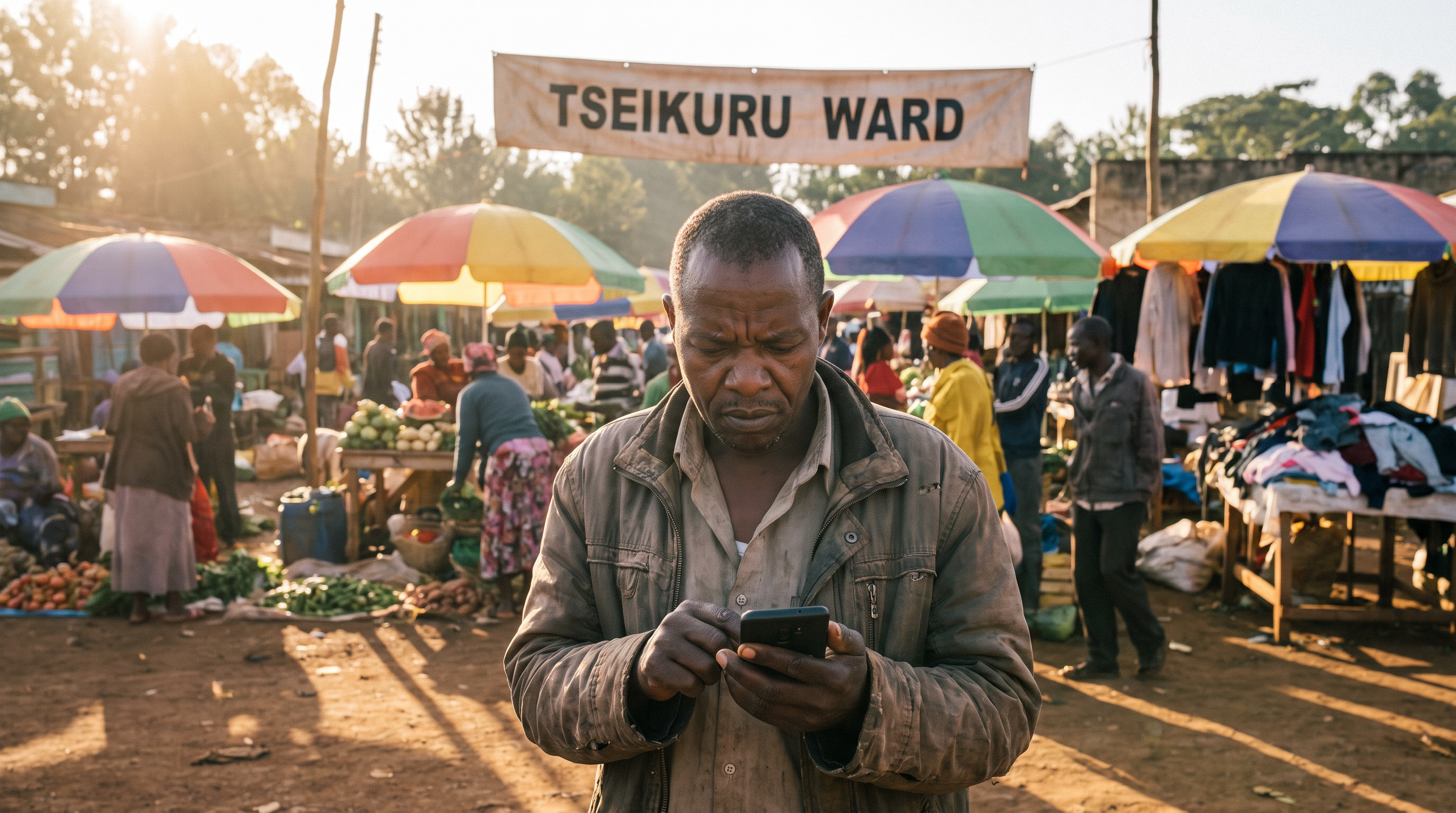
The 2026 Mobile Landscape: Why Performance is a Local Priority
Across Tseikuru Ward, the phone in a trader's pocket has quietly become the office, the bank branch, and the county service desk. Land rate payments, NHIF-linked services, school communications, and M-Pesa till reconciliation all now run through a handset. When that handset stutters, business stops.
That is why processing power stopped being a hobbyist concern in Kitui. Mobile-first governance means county portals and national ID services expect a device that can render modern web apps, handle encrypted sessions, and keep a camera-based document upload from timing out on a shaky connection.
The 2026 silicon generation makes the point loudly. Leaked Geekbench 6 testing put the Apple A19 Pro single-thread score at 3,895, with the same chip delivering a 37% GPU performance increase over the previous generation. Google took a different route, with the Tensor G5 posting a 50% AI performance jump. Premium storage carries a premium price — the iPhone 17 Pro Max in its 2TB configuration landed at $1,999.
The thesis of this guide from Tseikuru Times is simple: the best device for Kitui sits where efficiency, durability, and local service compatibility meet — not where the benchmark chart peaks.
Flagship Leaders: Evaluating the iPhone 18 Pro and S26 Ultra
The debate over the iPhone 18 Pro vs Samsung S26 Ultra usually starts with raw numbers, and Apple's silicon line has set a high bar. The A19 Pro's 37% GPU performance gain over its predecessor is the kind of jump that shows up in real work: multi-track video edits, color grading on location, and running heavy spreadsheets without the device throttling into a slideshow. For a Kitui-based videographer shooting weddings and county events, that headroom shortens turnaround time from days to hours.
Samsung's Ultra line counters with stylus input, longer software support windows, and camera reach that suits documentary and agricultural survey work. Both platforms will comfortably outlive a three-year ownership cycle.
The barrier is cost. CNET's spec comparison lists the iPhone 17 Pro Max 2TB configuration at $1,999 — before import duty, VAT, and local retail margin. For most households in Tseikuru, that figure sits well outside a reasonable hardware budget, and the honest advice is that flagship storage tiers are a professional tool purchase, not a consumer upgrade.
The AI Revolution: Google’s Tensor G5 and Local Utility
Raw clock speed does not help a farmer in Kyuso market. Faster on-device AI does.
Google's Tensor G5 delivered a 50% AI performance jump, and the practical result is processing that happens on the handset rather than in a distant data center. That distinction matters enormously where network coverage is patchy. Real-time translation between Kikamba, Kiswahili, and English no longer needs a stable connection to work. Voice-to-text dictation, which lets a trader log stock counts or record a supplier order while both hands are busy, runs locally and instantly.
For farmers photographing crop disease, on-device image recognition can produce a first assessment before any data leaves the phone. For small business owners, AI-assisted call screening and automatic transcription of supplier conversations reduce the admin burden that eats into selling hours.
This is why the Pixel line has moved from curiosity to serious contender among Kitui mobile tech trends. It is not winning on benchmark leaderboards, and it does not need to. It is winning on the specific tasks that occupy a working day here — language, documentation, and getting useful answers without a reliable data link.
Durability Benchmarks: Protecting Your Investment in Kitui
A phone that survives four years costs far less per year than one replaced every eighteen months, and that arithmetic is the real measure of value in a semi-arid county.
Dust is the underrated enemy. Fine particulate in Tseikuru's dry season works into speaker grilles, charging ports, and — on folding devices — hinge mechanisms. Modern precision hinges with brush-swept dust channels are not a marketing flourish; they determine whether a foldable is still usable in year three or grinding audibly by month ten. If you are considering a folding device for split-screen banking and stock records, hinge engineering deserves more scrutiny than screen crease.
On glass, the generational move from standard Gorilla Glass 5 to Ceramic Shield 2 and its equivalents buys meaningful protection against the two failure modes that actually happen: drops onto compacted earth and murram, and micro-abrasion from grit carried in a pocket alongside keys and coins.
Titanium frames resist the flex that cracks screens in a back pocket. Nano-texture displays cut glare enough to make a device readable in direct midday sun — which, for anyone working outdoors, converts a premium finish into a functional requirement rather than a luxury.
Mid-Range Value: Efficiency Over Raw Power
For most residents, the smartest purchase sits two tiers below the top. Chips like the Snapdragon 7 Gen 2 pair sufficient processing with genuinely frugal power draw — and in wards where grid supply is intermittent and charging may mean a trip to a solar kiosk, a handset that lasts two days is worth more than one that renders games beautifully for six hours.
Mid-range hardware now handles everything the average Kitui user actually does: M-Pesa, county service portals, WhatsApp business catalogs, video calls to family abroad, and casual gaming. The smartphone performance for Kenyan users equation weighs battery hours far more heavily than frame rates.
Who this is for:
Traders and boda operators who need all-day battery and reliable mobile money
Students and households running social, browsing, and video calls
Anyone charging from solar or shared power points
Buyers prioritizing repair cost and parts availability
Who should skip it:
Videographers recording and editing 4K footage on location
Professionals running several heavy apps simultaneously all day
Serious mobile gamers wanting sustained high frame rates
Users who keep a device five-plus years and need long performance headroom
The Bottom Line: What You Need to Know
Performance leadership is split. Apple's silicon holds the raw speed crown, but Google's Tensor line leads on practical AI utility. Choose based on which one your daily work actually uses.
Flagships are professional equipment, not a default upgrade. At top storage tiers they are a luxury purchase. Mid-range devices deliver the strongest return for the majority of Kitui households, and the value for money phones 2026 conversation should start there.
Durability is a financial decision. If you work outdoors, in dusty conditions, or on the move, prioritize strengthened glass, titanium frames, and sealed ports. Cost-per-year beats sticker price every time.
Battery efficiency outranks peak power. Where charging access is irregular, a two-day handset is more productive than a faster one that dies by afternoon.
Check connectivity before you pay. Confirm the device supports the 5G and LTE bands actually deployed across Kitui. A phone that cannot connect locally is a phone that cannot bank, pay, or file — regardless of its benchmark score.
Staying Informed with Tseikuru Times
Global specification sheets rarely account for a dropped signal on the road to Kyuso or a three-day outage at a charging point. That translation — from international product launches to what a device will actually do here — is the work Tseikuru Times does for this community.
We track the infrastructure that makes any of this hardware useful: mast installations, fiber rollout, power reliability, and the county's expanding digital service portals. When a retailer promises a device is "5G ready," local verification matters more than a brochure. Independent, locally grounded journalism is what separates a genuine upgrade from an expensive mistake, and it is why the best phones 2026 has produced still need to be judged on Kitui terms.
Tseikuru digital connectivity is improving year by year, and every improvement changes what residents and business owners should be buying. Follow Tseikuru Times for continuing coverage of regional governance, infrastructure projects, market conditions, and technology adoption across the ward.
Subscribe to Tseikuru Times for verified local news — so your next hardware decision is grounded in what is actually happening in Kitui, not what is trending elsewhere.