
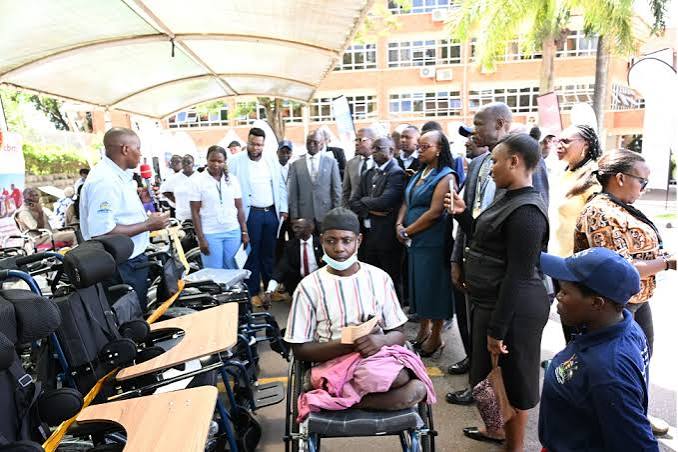
The Ministry of Education has begun concrete steps to revive Kenya’s long-neglected Education Assessment Resource Centres, many of which collapsed over the past decade through underfunding, staff attrition and shifting priorities.
Cabinet Secretary Julius Ogamba revealed that approximately Sh130 million has been set aside to rehabilitate the first batch of ten regional centres, with development partners expected to support the wider restoration of all 56 facilities that once operated at district and regional levels.
Previously, these centres allowed parents to bring children for professional assessment by teams drawn from the ministry and the Teachers Service Commission. Placement decisions into special schools, integrated units or mainstream classrooms depended on the findings.
When the system deteriorated, many learners with disabilities went unidentified or were poorly placed, limiting their educational opportunities and leaving families without guidance.
The absence of reliable national data on the number and types of disabilities—ranging from cerebral palsy and intellectual disabilities to visual, hearing and physical impairments—also hampered planning for teacher training, staffing ratios and specialised equipment.
Ogamba emphasised that proper individual assessment is a prerequisite even for basic assistive devices such as hearing aids. Without it, resources are either wasted or denied to those who need them most. The revival therefore addresses both a rights issue under the Constitution and the practical necessities of inclusive education.
Officials say the restored centres will generate the data required to guide future budgeting and teacher deployment. Implementation, however, will require more than refurbished buildings.
Trained assessors must be retained and motivated, equipment must be functional and regularly maintained, and rural families must receive transport or outreach support so that distance does not become another barrier.
In counties such as Kitui, where specialised services have historically been concentrated in larger towns, awareness campaigns and mobile assessment teams will be essential. Success will ultimately be measured not by the number of centres reopened but by the number of children correctly identified, appropriately placed and supported with the right interventions.
If the ministry sustains the effort beyond the initial funding announcement, the initiative could mark a meaningful step toward fulfilling the promise of quality education for every Kenyan child regardless of ability. If it fades after the first phase, it will join a long list of well-intentioned programmes that never reached the learners who needed them most.