
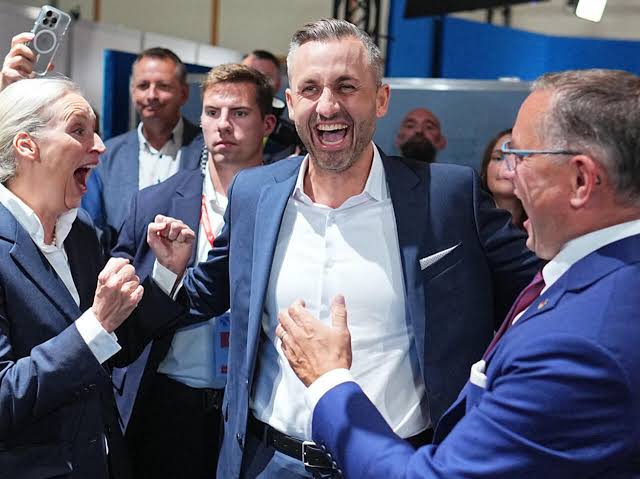
Germany awoke on September 7 to political shockwaves after the far-right Alternative for Germany (AfD) claimed a commanding lead in a regional election, according to exit polls and early counts.
The result in Saxony-Anhalt or the relevant state puts the party within realistic reach of forming a state government for the first time since the Second World War, intensifying pressure on Chancellor Friedrich Merz’s fragile national coalition.
AfD’s surge reflects persistent voter frustration over migration, energy costs, economic stagnation, and dissatisfaction with mainstream parties. Supporters frame the outcome as a democratic rebuke to Berlin’s policies. Opponents warn of normalisation of rhetoric long considered beyond the pale of post-war German consensus.
Forming a government would require either coalition partners or a minority arrangement, both of which remain uncertain and politically toxic for centrist parties. The European context is important. Similar gains by hard-right parties across the continent have already shifted policy debates on borders and fiscal priorities.
Germany’s economic weight means any prolonged instability could ripple through the eurozone. Markets watched the results closely; the euro and German yields showed early reactions. For observers in Africa, including Kenya, the story carries lessons about how economic insecurity and identity politics can reshape established democracies.
Germany has been a significant development partner and investor in East Africa. A more inward-looking Berlin could affect aid priorities, trade preferences, and climate financing. Domestically, the result forces Germany’s mainstream parties to confront whether incremental adjustments will suffice or whether deeper policy resets are required.
The coming weeks of coalition talks will test the resilience of Germany’s post-war political architecture. Title: U. S. Envoys Shuttle Between Moscow and Kyiv as Limited Ceasefire Holds
Excerpt: Jared Kushner and Steve Witkoff report “substantive” talks after meetings with Putin and Zelenskyy; temporary halt on strikes against capitals offers narrow diplomatic window.
Content:
U. S. special envoys Jared Kushner and Steve Witkoff completed a high-stakes shuttle between Moscow and Kyiv over the weekend, describing discussions with Russian President Vladimir Putin and Ukrainian President Volodymyr Zelenskyy as substantive.
A temporary mutual understanding to refrain from strikes on Moscow and Kyiv during the talks provided a fragile pause in the long-running conflict. The meetings come amid continued fighting on other fronts and recent U. S. actions against Iranian-linked targets in the broader Middle East theatre, underscoring how multiple conflicts intersect.
Ukraine has signalled readiness to observe limited restraint, while Russia characterises the conversations as frank. No comprehensive ceasefire or territorial agreement has emerged, and core disagreements over security guarantees, occupied territories, and future European security architecture remain unresolved.
For global commodity markets and energy security, any sustained reduction in escalation risk is welcome. Kenya and other African nations have felt the secondary effects through fertiliser prices, grain logistics, and fuel costs since the conflict began. Diplomatic progress, however limited, offers breathing room. Scepticism is warranted.
Previous rounds of talks have produced temporary pauses that later collapsed. The involvement of high-profile American intermediaries reflects the Trump administration’s continued engagement style. Whether the current window expands into meaningful negotiations or closes under military pressure will determine if this latest initiative becomes a footnote or a turning point.
African diplomats watching from the sidelines will measure success not by rhetoric but by tangible relief in food and energy markets.