Drive or walk through Tseikuru on any ordinary morning and the daily reality of water scarcity becomes immediately visible. Women and children head toward earth dams or distant streams carrying jerrycans. Donkeys are loaded with containers. In some households the first hours of the day are spent securing enough water for drinking, cooking, and livestock before any other work can begin.
This is not a temporary dry-season inconvenience; it is a structural challenge that has defined life in the area for generations.The Tana River flows relatively nearby, yet the infrastructure required to bring reliable piped water to most households has never been fully realised. Past administrations launched projects with considerable fanfare. Some boreholes were drilled, some earth dams expanded, and limited pipeline work began. However, many initiatives stalled due to funding gaps, procurement disputes, or maintenance failures. The result is that large numbers of residents continue to depend on seasonal and often contaminated sources.Road infrastructure tells a similar story. The long-promised tarmac connecting Tseikuru more effectively to Mwingi and beyond has progressed slowly. Dusty, uneven roads increase transport costs for farmers taking produce to market, limit the reach of emergency services, and discourage investment. When Deputy President Kithure Kindiki recently noted that Tseikuru still has “more donkeys than people” because of the lack of piped water, the remark captured a widely shared frustration even if the phrasing was political.Yet the picture is not entirely bleak. The presence of Tseikuru National Polytechnic (formerly the Technical Training Institute) represents a concrete investment in human capital. Young people from the surrounding wards now have access to practical courses in electrical engineering, automotive skills, computing, and business. If linked effectively to local economic opportunities—agro-processing, small-scale manufacturing, or service enterprises—the institution can help retain talent and reduce the pressure of out-migration.What residents consistently request is not new political slogans but reliable delivery.
They want functional water systems that survive beyond the next election cycle. They want roads that remain passable during the rains. They want transparent information about project budgets, timelines, and responsible officers. Community participation in planning and monitoring is frequently mentioned as a missing ingredient. When local people feel ownership of projects, maintenance improves and waste decreases.The development agenda in Tseikuru is therefore both technical and political. Technical solutions exist—solar-powered boreholes, gravity-fed systems where topography allows, strategic sand dams, and climate-resilient road designs. The political challenge is ensuring continuity, accountability, and prioritisation of the most underserved wards.
As national and county leaders position themselves for 2027, the people of Tseikuru will judge them less by campaign rhetoric and more by whether the long walk for water finally becomes shorter and safer.Tseikuru Times remains committed to documenting both progress and shortcomings. High-value development reporting means going beyond announcements to examine results on the ground. It means amplifying the voices of ordinary residents—farmers, traders, students, and mothers—whose daily experience is the true measure of success. The unfinished agenda is clear. The opportunity to finish it remains open.
Kenya
Water, Roads and Opportunity: The Unfinished Development Agenda in Tseikuru
By Tseikuru Times · 2026-08-04T06:46:00.115Z
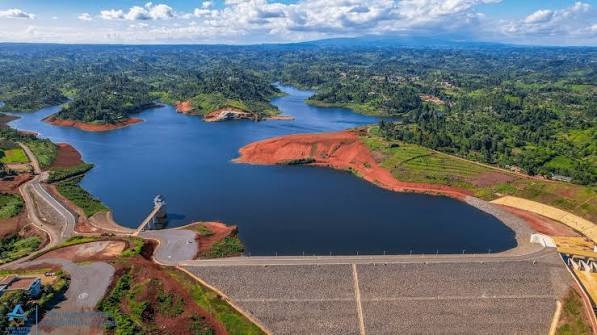
Despite years of political attention and repeated promises, many residents of Tseikuru still struggle with basic water access and poor road connectivity. A closer look at what has been delivered, what remains unfinished, and what local people say they need most