In the dusty roads and vibrant marketplaces of Tseikuru, conversations these days rarely stay on the weather or livestock prices for long. Politics has returned with force. Recent discussions across social media and local gatherings centre on former Kitui Governor Charity Ngilu, current county leadership, and the unfinished business of governance that continues to shape daily life in Mwingi North.Ngilu’s tenure from 2017 to 2022 remains a polarising chapter. Supporters point to her focus on water projects as a genuine attempt to address one of the region’s most stubborn challenges.
In a semi-arid area where earth dams still serve as the primary water source for many households, any initiative that promised better access carried weight. Critics, however, argue that several ambitious projects, including the long-discussed Umaa Dam, never delivered the expected results. Stories of delayed payments to contractors, incomplete infrastructure, and questions over resource management continue to surface in local debates.
The latest spark came from reports of Ngilu confronting UDA MCAs at a school fundraiser over modest contributions. While the incident itself may seem small, it has reignited broader conversations about political culture in Kitui. Residents ask whether personal rivalries and party manoeuvres are once again overshadowing service delivery. At the same time, the high court order halting an impeachment process against the County Treasury Executive has added another layer of complexity, leaving many wondering how accountability mechanisms will function going forward.For people in Tseikuru, these high-level contests are not abstract. The area has long been associated with Kalonzo Musyoka, often referred to affectionately as “the Son of Tseikuru.” His political influence still resonates, and many locals measure current leaders against the expectations he once raised about roads, water, and economic opportunity.
Deputy President Kithure Kindiki’s recent comments highlighting the lack of piped water and the slow pace of tarmac roads in Tseikuru only sharpened that comparison.What stands out is the persistent gap between political promises and lived reality. Families still walk long distances or rely on donkeys to fetch water. Seasonal rivers dry up, and the proximity of the Tana River has not translated into reliable local supply for most residents. Youth unemployment remains high, and the technical training institute in Tseikuru, while a positive presence, cannot single-handedly absorb the demand for skills and jobs.As 2027 approaches, the people of Tseikuru and the wider Mwingi North constituency will demand more than rhetoric. They will look for leaders who prioritise practical solutions—sustainable water systems, improved roads linking markets to farms, and transparent management of county resources.
The current political heat offers an opportunity for genuine debate rather than recycled grievances. Whether that opportunity is seized will determine if the next chapter brings progress or more of the same.Local voices matter most. When residents speak of “goonism,” delayed projects, or the need for experienced managers, they are not merely commenting on distant politicians. They are describing the conditions under which their children grow up, their livestock survive, and their hopes for a better future either grow or wither. Tseikuru Times will continue to track these developments with clarity and fairness, because the story of Kitui politics is ultimately the story of its people.
Kenya
Kitui Politics Heats Up: Ngilu’s Shadow and the Fight for Local Power Ahead of 2027
By Richard Musya · 2026-08-04T06:34:54.650Z
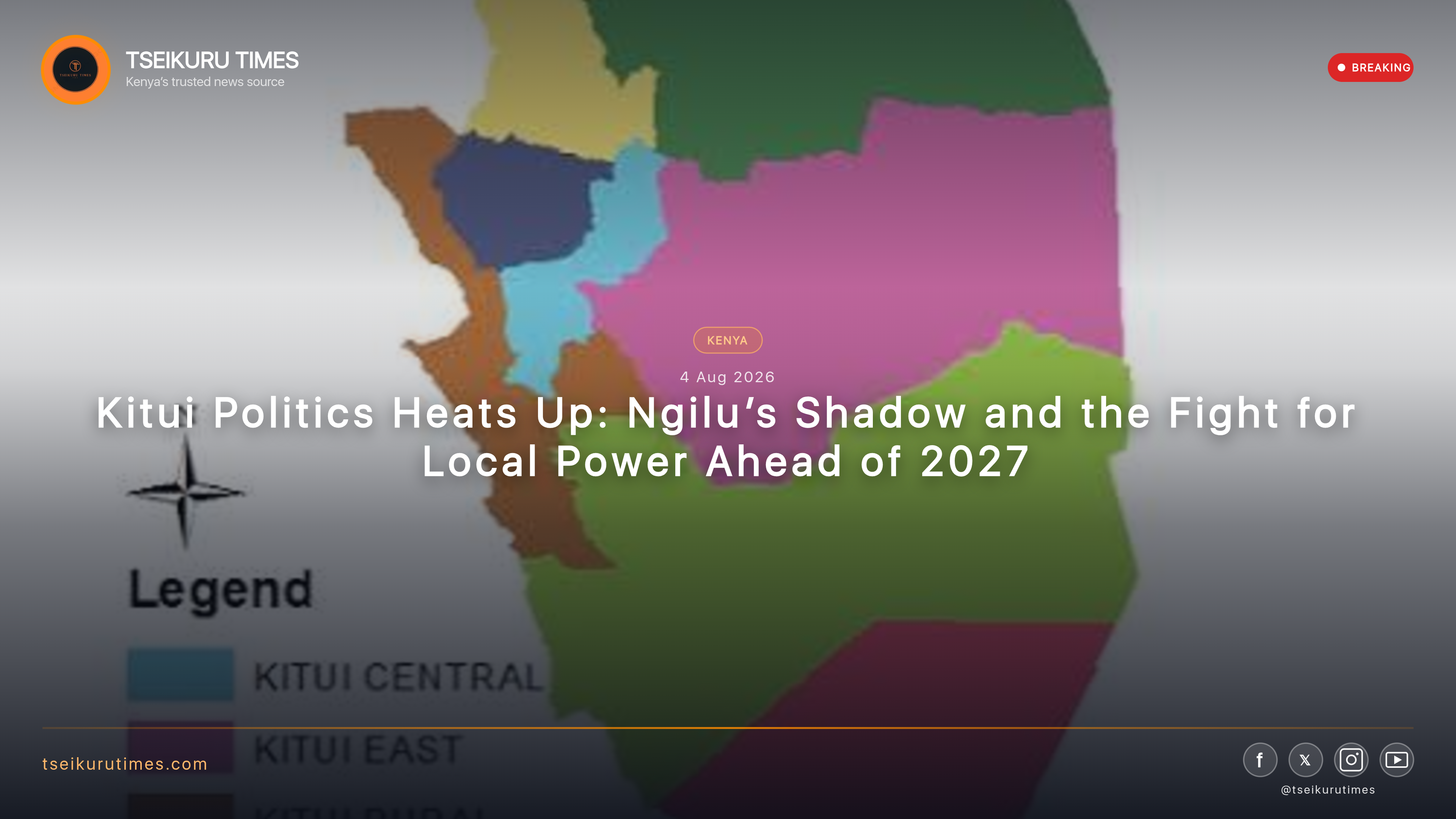
As Kitui County navigates fresh political tensions involving former Governor Charity Ngilu, MCAs, and rising calls for accountability, residents of Tseikuru and Mwingi North watch closely. What does this mean for development, water access, and the legacy of “the Son of Tseikuru”?