Barely 20 months into the deputy presidency after Rigathi Gachagua’s impeachment in late 2024, Kindiki finds himself fighting a rear-guard battle to stay relevant. In late July 2026, speaking in Meru, he declared bluntly that those “salivating” for his job should forget it and that the ticket would win. The bravado was classic Kindiki—professorial, emphatic, and aimed at projecting permanence. Yet the same week, Public Service Cabinet Secretary Geoffrey Ruku, a fellow Mount Kenya East figure, delivered a colder reality check. Ruku made clear that the region’s roughly two million votes would still flow to Ruto even if Kindiki is dropped, insisting the choice of running mate remains solely the president’s prerogative.
That statement landed like a quiet dagger. It confirmed what many in Nairobi and the Central highlands already suspected: Kindiki’s utility as the post-Gachagua bridge to Mount Kenya is no longer non-negotiable. Ruto’s broader Kenya Kwanza coalition is evolving into a larger, more transactional vehicle that must accommodate ODM’s hard demands for the deputy presidency as the price of continued support. Names like Gladys Wanga, Wycliffe Oparanya, and others circulate openly. Reports of Kindiki’s intergovernmental coordination duties being quietly shifted toward Prime Cabinet Secretary Musalia Mudavadi—swiftly denied by the DP’s camp as “fake news”—only added to the sense of institutional erosion.
x.com
The numbers tell their own story. Gachagua’s Democracy for Citizens Party scored a crushing win in the Ol Kalou by-election, exposing the limits of Kindiki’s ability to deliver the old Mount Kenya loyalty that propelled Ruto in 2022. Earlier by-elections and surveys have shown soft support and popularity dips. While one poll still listed Kindiki as the most preferred deputy at 34 percent, preference and political necessity are different currencies in Ruto’s calculus.
Kindiki’s earlier mixed signals—once describing the deputy office as temporary and hinting he might not be guaranteed a slot—have come back to haunt him. He is now forced into public declarations of permanence precisely because the ground is shifting. Ruto has floated gender equity on future tickets, another subtle signal that a male professor from Meru may not fit the next electoral arithmetic. ODM’s insistence on a 50-50 power share further reduces Kindiki’s bargaining power; he lacks the independent mass base or party machinery to force Ruto’s hand.
The dilemma is classic and brutal. Stay and risk being discarded at the last minute, or resign early and try to reinvent himself—options that have rarely ended well for Kenyan deputies. History is littered with similar figures who misread the moment. Kindiki’s academic credentials and calm public demeanor once looked like assets after Gachagua’s confrontational style. They now look insufficient against the raw arithmetic of votes, alliances, and presidential self-interest.
As 2027 approaches, the boiling is no longer subtle. Regional leaders hedge, coalition partners stake claims, and the president keeps his options open. Kindiki may continue to insist the ticket is settled. The rest of the political class has already moved on. He is not the running mate in waiting. He is the man being managed out of contention, one carefully worded statement and one transferred docket at a time.
Kenya
The Sidelining of Kithure Kindiki: Mounting Pressures Signal He Is Not Ruto’s 2027 Running Mate
By Tseikuru Times · 2026-07-29T13:10:30.195Z
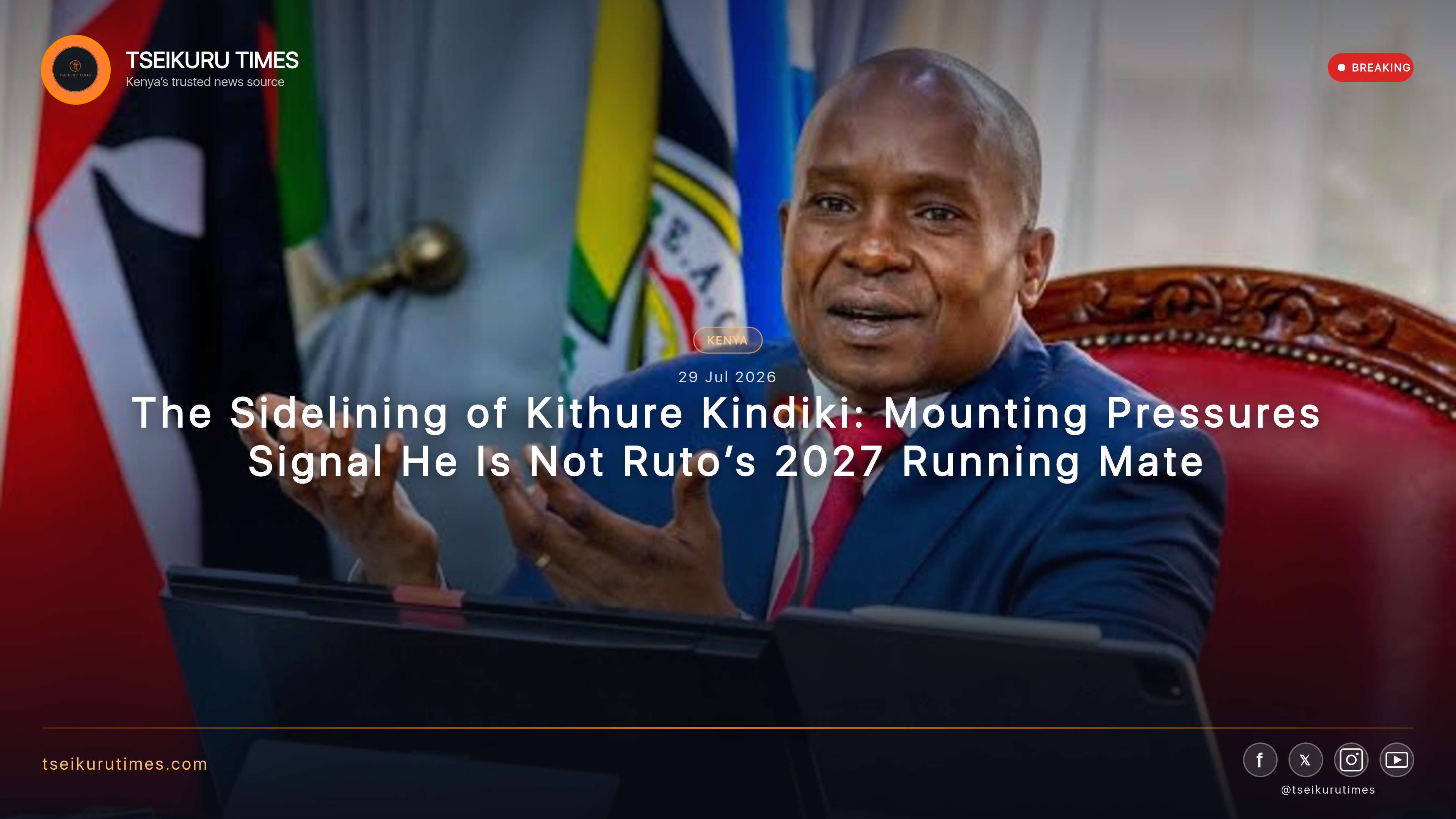
Deputy President Kithure Kindiki’s insistence that the “Ruto-Kindiki ticket” is locked in for 2027 rings increasingly hollow as political realignments, regional defections, and coalition demands close in around him. Everyone watching Kenyan politics knows the writing is on the wall: he is not up for grabs as President William Ruto’s running mate next year.