
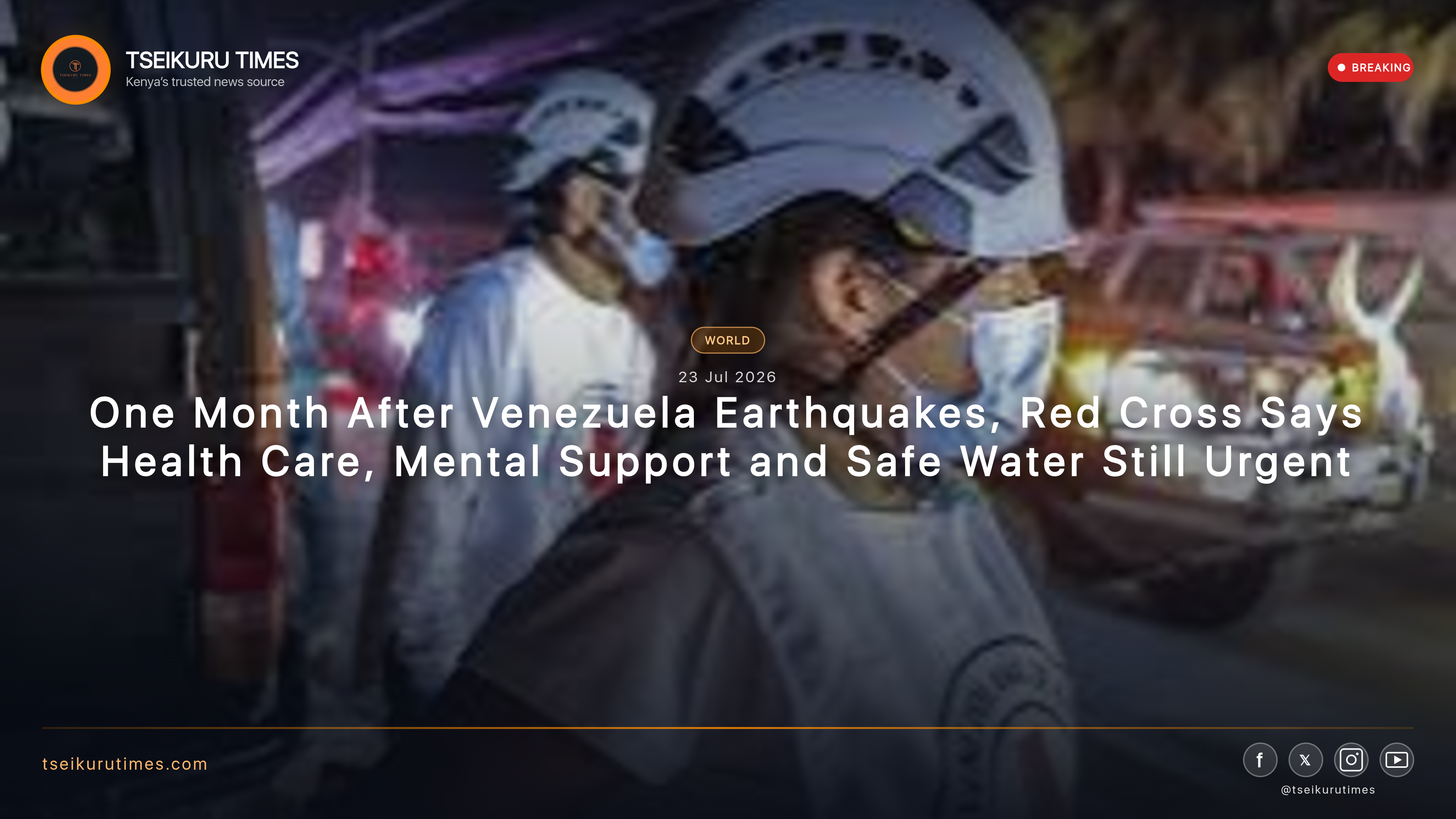
One month after two powerful earthquakes struck north-central Venezuela on 24 June 2026, the International Federation of Red Cross and Red Crescent Societies (IFRC) and the Venezuelan Red Cross (VRC) have identified three critical areas that still require urgent humanitarian attention. The twin quakes — a magnitude 7.2 foreshock followed just 39 seconds later by a magnitude 7.5 mainshock — had epicentres near Yumare in the Yaracuy region and caused widespread destruction across Caracas, La Guaira and neighbouring states including Carabobo, Miranda, Aragua and Yaracuy.
In a statement issued on 23 July 2026 from Caracas, Panama City and Geneva, the organisations listed primary health care, mental health and psychosocial support, and access to safe water as the most pressing needs for both the immediate and medium-term response. Official figures and assessments indicate that the earthquakes killed more than 1,400 people in the first days and left several thousand injured, with later updates placing the death toll higher and the number of injured in the tens of thousands. Hundreds of buildings collapsed or suffered severe structural damage, particularly in La Guaira where large parts of the urban fabric were affected, while power, telecommunications, transport and key health facilities were disrupted. An estimated 8 to 9.7 million people experienced moderate to severe shaking, and hundreds of thousands remain in need of assistance.
The update underlines that these three services remain essential for communities still recovering. Hospitals and polyclinics run by the Venezuelan Red Cross continue to treat the injured and those with ongoing medical needs, yet primary health care capacity is stretched. Mental-health and psychosocial support is required for survivors dealing with trauma, loss and prolonged displacement. Safe water remains a priority because infrastructure damage and the risk of aftershocks have compromised normal supply systems, increasing the danger of water-borne disease. The IFRC had earlier launched an emergency appeal targeting 300,000 people and dispatched initial consignments of relief items including water filters, hygiene kits, tarpaulins and other essentials from its regional hub in Panama.
Accurate delivery of health services, emotional support and clean water continues to determine how quickly affected families can regain stability. The Venezuelan Red Cross activated rescue and assessment teams within hours of the quakes, mobilised pre-positioned stocks and has maintained coordination with national authorities and the wider Red Cross Red Crescent Movement. International partners, including contributions channelled through the IFRC Disaster Response Emergency Fund, have supported the scale-up of operations, yet funding gaps and logistical challenges persist one month later. Although the situation is specific to Venezuela, the focus on post-disaster health, mental well-being and safe water carries clear lessons for any region exposed to sudden natural shocks. In Kitui County and Tseikuru Sub-County, where recurrent drought, occasional flooding and other emergencies can rapidly strain local clinics, water points and community coping mechanisms, county departments and community leaders may find value in reviewing how these three priorities are currently handled during local response plans. Strengthening routine contingency-stock tracking, pre-positioning of medical and water-treatment supplies, and training of community psychosocial first-aid volunteers can reduce the impact of future crises.
Tseikuru Times will seek comment from relevant Kitui County health, water and disaster-management officers before publishing any final report and will continue to monitor further statements from the Red Cross network and United Nations agencies.