Former BBC journalist and media personality Ferdinand Omondi has disclosed that he has been facing death threats and abusive messages following his comments on the planned Aliko Dangote oil refinery in Lamu. Omondi had raised concerns about the massive project, prompting a wave of hostile reactions on social media. He stated that the threats have been both direct and disturbing, raising serious questions about freedom of expression in the country.
The journalist’s remarks came after the announcement that Dangote Industries had selected Lamu as the site for what would be one of the largest oil refineries in East Africa. While the project is expected to bring significant economic benefits, including job creation and investment, Omondi had questioned certain aspects of the deal and called for greater transparency. His comments triggered strong backlash from some supporters of the project who accused him of opposing development.
Omondi’s experience highlights the growing risks faced by journalists and public figures who speak on controversial national issues. He has indicated that the threats have not deterred him from continuing to ask important questions, but he has expressed concern about the safety of media practitioners who hold powerful interests to account. The incident has drawn attention to the need for better protection of journalists exercising their right to free speech.
The development has sparked debate on social media and among media practitioners about the space for critical journalism in Kenya. Many have condemned the threats and called on authorities to investigate and ensure the safety of those who raise legitimate concerns about major projects. Omondi’s case serves as a reminder of the challenges journalists continue to face when covering sensitive economic and political matters.
Kenya
Former BBC Journalist Ferdinand Omondi Receives Death Threats Over Dangote Refinery Project
By Editorial Team · 2026-07-19T13:01:21.067Z
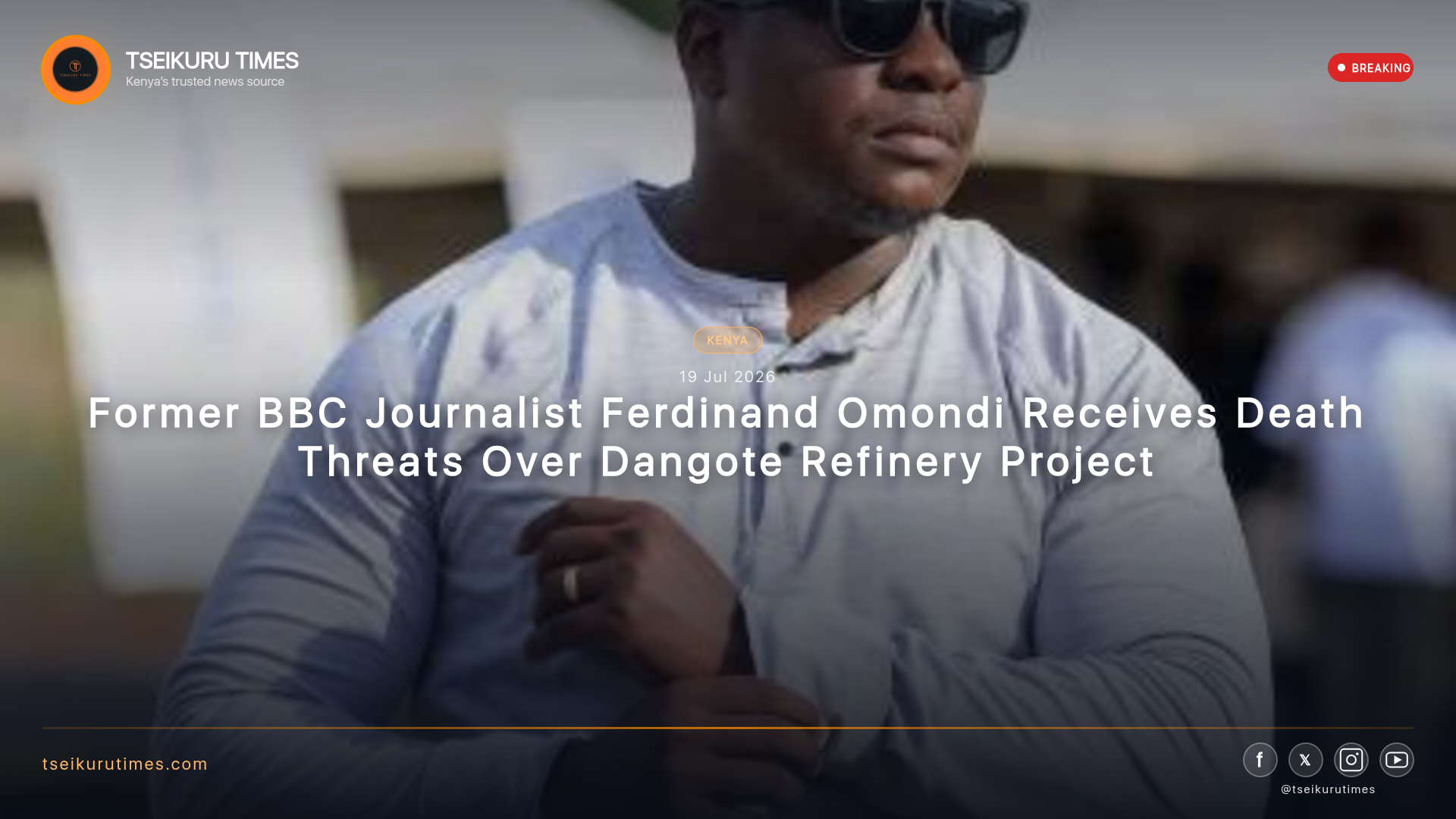
Former BBC journalist Ferdinand Omondi has revealed that he has been receiving death threats and violent messages online after publicly questioning the proposed Aliko Dangote oil refinery project in Lamu County.